

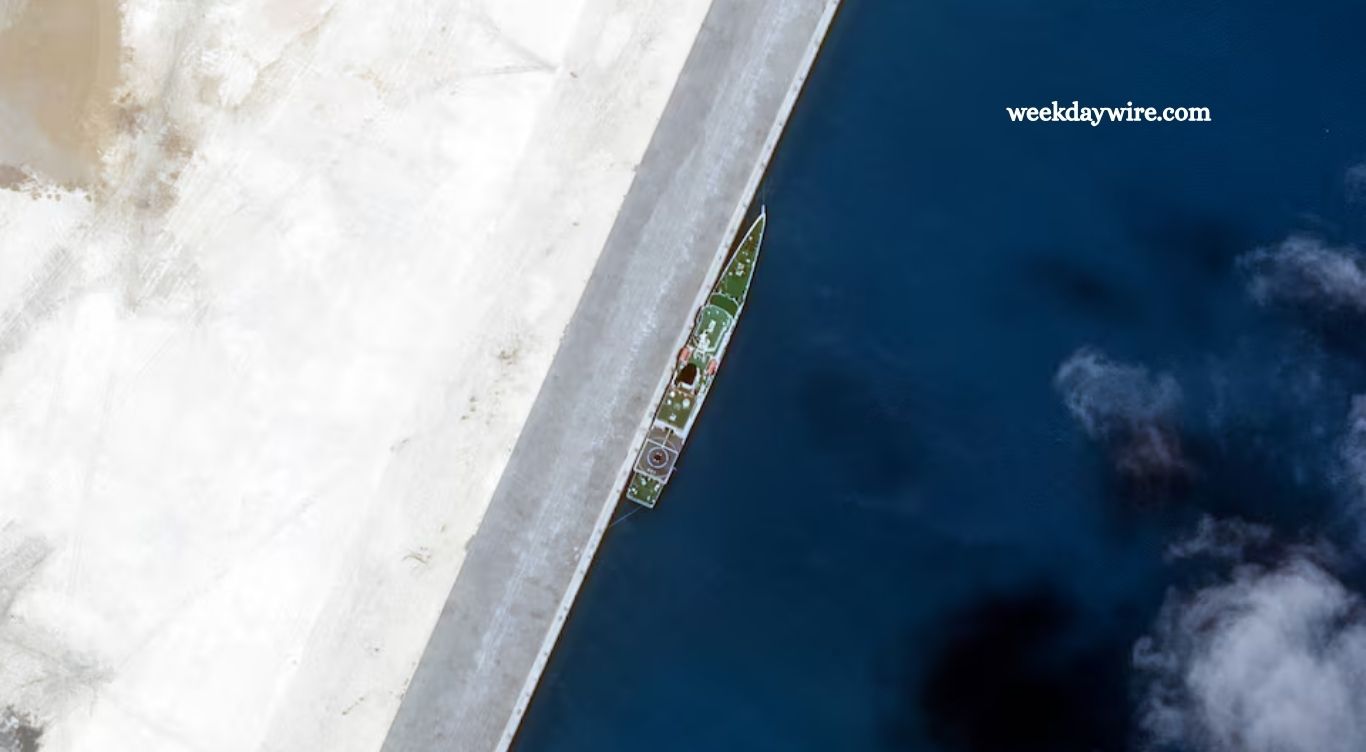
China has completed the first phase of major construction work at Antelope Reef in the Paracel Islands, creating a large artificial landmass in one of the world’s most strategically contested waterways. Satellite imagery reviewed by Reuters shows the newly reclaimed feature taking shape after at least six months of dredging and land reclamation.
The development has attracted attention from regional security experts because of Antelope Reef’s location and potential military value. Although Beijing has not officially confirmed plans to establish a new military facility there, analysts believe the expanded reef could eventually become an important part of China’s growing network of bases across the South China Sea.
Read More: U.S. Delays 50% Tariff on Canadian Imports as Florida Primary Results Offer Key Takeaways
The construction comes as tensions continue to rise between China, the United States and several Southeast Asian nations over territorial claims, maritime security and access to critical sea routes.
Satellite Images Reveal Major Land Reclamation
Satellite images taken on July 19 show that much of the initial reclamation work at Antelope Reef has been completed. Barges and dredging equipment that had been operating in the area for months appear to have moved away, leaving behind a clearly defined artificial island.
The reclaimed feature is nearly 6 kilometers long and includes a straight stretch of coastline extending more than 3 kilometers. Analysts say the dimensions could potentially support the development of a runway, although the exact purpose of the structure remains uncertain.
Construction of additional facilities has already begun in the southeastern section of the reclaimed island. The imagery shows what analysts identify as a helicopter pad and other early-stage infrastructure.
A large wharf measuring approximately 680 meters also extends along a deep-water harbor. One satellite image showed a Chinese coast guard vessel alongside the facility, highlighting the site’s potential value for maritime operations.
Antelope Reef Could Become a Major Strategic Location
Antelope Reef’s geographical position makes the development particularly significant. Located in the northern part of the South China Sea, the reef sits relatively close to the Chinese mainland and within an area that could become important during a potential conflict involving Taiwan.
Ben Lewis, founder of open-source intelligence platform PLATracker, said the northern South China Sea would have major importance in a Taiwan conflict scenario. He described Antelope Reef as being ideally positioned for such circumstances.
The potential facility could also be larger and easier to defend than several Chinese outposts farther south in the Spratly Islands.
China already operates substantial facilities across the South China Sea. Woody Island, another feature in the Paracels, has traditionally served as an important administrative and military center. It has hosted fighter aircraft and surface-to-air missile systems.
Triton Island, also part of the Paracel group, is known for extensive surveillance capabilities.
Antelope Reef could therefore add another layer to China’s existing military and surveillance infrastructure.
Potential Runway and Military Infrastructure
The possibility of a runway is one of the most closely watched aspects of the construction.
A study by the Center for Strategic and International Studies indicated that excavation associated with a potential runway may already have begun. If a full runway is eventually constructed, the site could support aircraft operations and significantly increase China’s ability to monitor and control airspace over the northern South China Sea.
However, satellite imagery alone does not establish what military equipment or capabilities the completed facility will eventually contain.
Analysts also expect surveillance systems to play an important role. A larger permanent installation could provide China with expanded capabilities to track ships, aircraft and underwater activity throughout surrounding waters.
Such capabilities would have implications for both peacetime monitoring and military planning.
China Maintains the Facility Has Civilian Purposes
Beijing has not publicly acknowledged plans to establish a new military base at Antelope Reef.
Chinese state media have previously described the development as serving civilian purposes, including weather forecasting, scientific research and maritime safety. Chinese scholar Ding Duo characterized the construction as modest in an opinion article published by China Daily and argued that the purpose was peaceful and intended to make the waters safer.
China has used similar explanations when defending previous construction and infrastructure projects in disputed areas of the South China Sea.
However, regional security analysts remain skeptical about the distinction between civilian and military functions. Infrastructure such as runways, ports, communications equipment and surveillance systems can have both civilian and military applications.
China’s Defense Ministry did not immediately respond to Reuters’ request for comment regarding the latest construction.
Vietnam Objects to China’s Activities
The construction has also raised concerns in Vietnam, which claims sovereignty over the Paracel Islands, including Antelope Reef.
China has controlled the Paracels since 1974, when Chinese forces defeated the navy of the former South Vietnam and took control of the islands.
Vietnam has repeatedly rejected China’s claims over the archipelago. Following earlier construction activity, Vietnamese officials said they opposed actions that violated Vietnam’s sovereignty and stated that diplomatic representations had been made to Beijing.
Vietnam has also expanded its own infrastructure in the Spratly Islands in recent years, reflecting the broader competition over territory and military positioning in the region.
The competing construction projects demonstrate how several countries are strengthening their presence in disputed South China Sea waters.
Possible Role in China’s Submarine Strategy
Beyond aircraft and surface vessels, Antelope Reef could eventually play a role in China’s submarine operations.
Security scholar Collin Koh said the location could support China’s efforts to establish protected maritime areas, sometimes described as bastions, for nuclear-armed ballistic missile submarines.
Such protected areas could make it harder for rival forces to detect and track Chinese submarines operating near their home ports.
China’s ballistic missile submarines are an important component of its nuclear deterrent. Keeping them within heavily monitored and defended waters could reduce their exposure before they reach the broader Pacific.
The South China Sea is particularly valuable for this purpose because of its proximity to China’s naval facilities and its relatively enclosed geography.
Expanded surveillance infrastructure around Antelope Reef could therefore help China monitor underwater activity involving the United States and regional countries.
Wider U.S.-China Competition
The development at Antelope Reef comes amid broader strategic competition between China and the United States.
Washington does not recognize China’s sweeping territorial claims across much of the South China Sea and regularly conducts military operations in the region to challenge what it considers excessive maritime claims.
The United States also maintains security partnerships with several countries in the region, including the Philippines, while continuing to strengthen cooperation with allies and partners concerned about China’s growing military capabilities.
For U.S. military planners, every additional Chinese facility creates another location that could potentially support surveillance, logistics or military operations.
Carl Thayer, a professor at the Australian Defence Force Academy, said the new infrastructure could strengthen China’s ability to monitor the region during peacetime while creating additional challenges during a conflict.
Antelope Reef Reflects the Changing South China Sea
The transformation of Antelope Reef illustrates how quickly disputed maritime features can change through large-scale land reclamation.
What was once a reef is now emerging as a substantial artificial island with a harbor, coastal infrastructure and early signs of additional construction.
The development does not automatically mean that Antelope Reef will become a fully operational military base. Much will depend on what China builds next and how the facilities are ultimately used.
Still, analysts say the location gives the site considerable strategic potential. Its position in the northern South China Sea, proximity to China and possible ability to accommodate aircraft, ships and surveillance systems could make it an important addition to Beijing’s regional presence.
Frequently Asked Questions
What is happening at Antelope Reef?
China has completed the first phase of land reclamation and construction at Antelope Reef in the disputed Paracel Islands.
Where is Antelope Reef located?
Antelope Reef is located in the Paracel Islands in the northern South China Sea, an area subject to competing territorial claims.
Could Antelope Reef become a military base?
Analysts believe the site could support military activities, although China has not officially confirmed plans to establish a military base there.
What infrastructure has China built at the reef?
Satellite images show a large reclaimed island, a deep-water harbor, a long wharf and early construction including a helicopter pad.
Why is Antelope Reef strategically important?
Its northern South China Sea location could support surveillance, naval operations, aircraft activity and potentially China’s strategic interests involving Taiwan.
Does Vietnam claim Antelope Reef?
Yes. Vietnam claims sovereignty over the Paracel Islands and has strongly opposed China’s construction activities in the area.
Why is the South China Sea important?
The South China Sea is a major shipping route and a strategically important region where China, the United States and several Asian countries have competing interests.
Conclusion
China’s development of Antelope Reef marks another significant change in the disputed South China Sea. The newly reclaimed island, harbor and emerging infrastructure could strengthen China’s surveillance, maritime operations and strategic presence in the region. Although Beijing describes the project as serving civilian purposes, regional analysts remain concerned about its potential military applications.
