

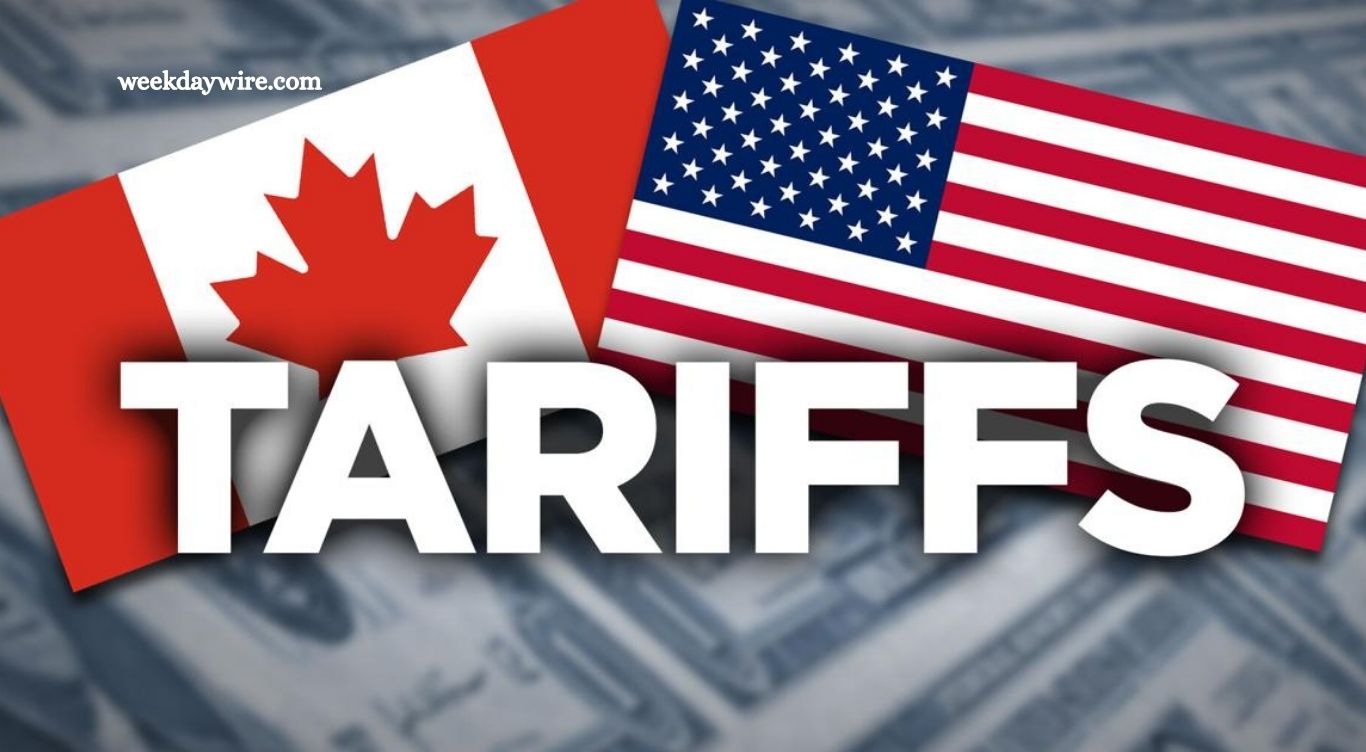
The United States has delayed a planned 50% tariff on approximately $20 billion worth of Canadian imports, creating another twist in the increasingly uncertain trade relationship between the two North American neighbors. President Donald Trump announced the three-day postponement shortly before the tariff deadline, saying the decision followed an agreement involving the controversial Keystone pipeline project.
At the same time, Florida’s Democratic Senate primary has produced a major political upset. Progressive state Rep. Angie Nixon defeated Alex Vindman, overcoming a significant fundraising disadvantage and limited national recognition. Her victory highlights the influence of grassroots organizing, labor advocacy and voting rights activism in a state where Democrats face a difficult general-election environment.
U.S. Delays 50% Tariff on Canadian Imports
President Trump announced that the United States would postpone a 50% tariff on certain Canadian imports for three days. The affected goods are reportedly worth around $20 billion, making the decision significant for businesses and consumers involved in cross-border trade.
Read More: Ukraine’s New Defence Minister Takes Office Amid Political Turmoil
Trump said the delay was connected to an agreement between the United States and Canada aimed at restarting construction of the Keystone pipeline. The proposed pipeline has remained one of the most controversial energy infrastructure projects involving Canada and the United States.
However, important details about the agreement remain unclear. Neither country has publicly released a comprehensive explanation of what was agreed upon or how the pipeline project would move forward.
The short postponement therefore does not necessarily signal a permanent resolution to the trade dispute. Instead, it gives both governments additional time to negotiate while businesses continue watching for clarity.
Trade Uncertainty Raises Concerns for North America
The tariff dispute comes as the future of the United States-Mexico-Canada Agreement remains uncertain. The USMCA has supported hundreds of billions of dollars in largely duty-free trade across North America and has become an important foundation for regional supply chains.
Despite the agreement’s economic importance, Trump has previously expressed doubts about renewing it. His changing positions on trade and security issues have made long-term planning more difficult for companies operating across the continent.

Businesses typically make major investment decisions based on predictable rules. Frequent changes in tariffs, trade agreements and cross-border policies can make companies more cautious about expanding factories, hiring workers or developing new supply chains.
For Canada, the latest tariff threat also adds to growing tensions with Washington. Even a temporary delay may not be enough to repair broader disagreements between the two countries.
Angie Nixon Wins Florida Democratic Senate Primary
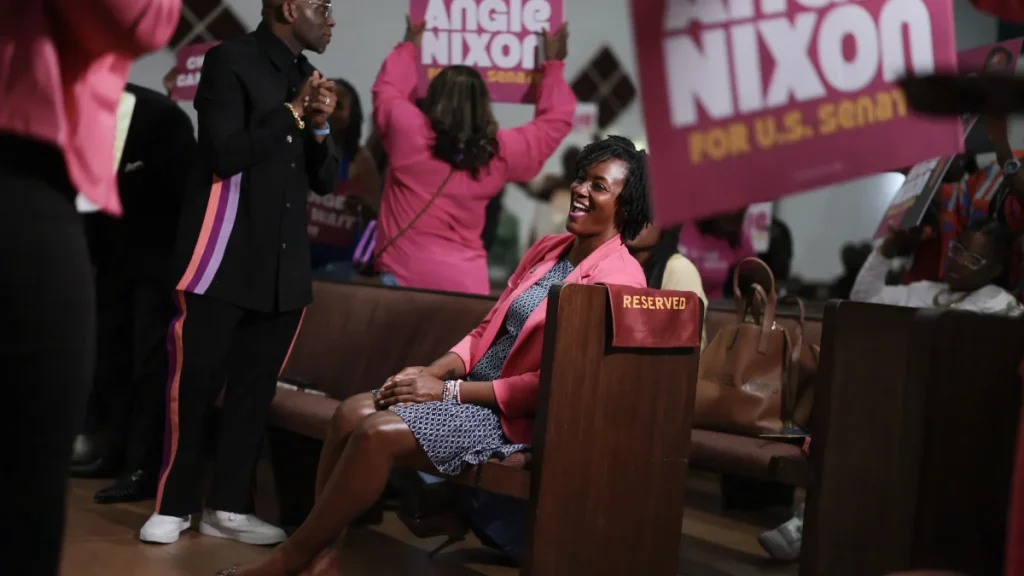
Florida Democrats also have a major political story to consider after state Rep. Angie Nixon defeated Alex Vindman in the Democratic U.S. Senate primary.
Nixon’s victory was notable because she entered the race without the national profile enjoyed by her opponent and was dramatically outraised during the campaign. Her success demonstrates the potential strength of grassroots political organizing, particularly among voters who respond to candidates with established records on local issues.

Nixon has built her political identity around labor issues, voting rights and activism. Those issues helped distinguish her campaign and gave her a connection with progressive voters.
Her victory now places her in a much larger political contest. Florida remains a strongly Republican state, meaning Democrats face a significant challenge in the general election.
The Challenge Ahead for Nixon
Winning the Democratic primary is only the first step for Nixon. Her biggest challenge will be expanding her appeal beyond the progressive voters who helped her secure the nomination.
A statewide Senate campaign requires reaching voters across Florida’s diverse political and demographic landscape. Nixon will need to communicate her positions to independent voters and moderate Democrats while maintaining support among the progressive coalition that propelled her to victory.

National Democrats are not widely optimistic about flipping Florida, making the campaign an uphill battle. Still, Nixon’s primary victory could encourage Democratic strategists to reconsider how grassroots candidates can compete against better-funded opponents.
Her ability to build a statewide coalition will likely determine whether her primary success translates into a competitive general-election campaign.
Meta Faces Major Social Media Trial
Another major national story involves Meta, the parent company of Facebook and Instagram. The company is facing a high-stakes trial brought by four states that accuse it of intentionally designing its social media platforms to encourage addictive behavior among young users.
The states also allege that Meta misrepresented the risks associated with its platforms.
The potential financial consequences are enormous. Initial estimates have placed possible penalties as high as $1.4 trillion, an amount comparable to the entire market value of Meta’s equity on Nasdaq.
The case could become one of the most consequential legal battles involving a major technology company and social media platforms.
Whistleblower Testimony Puts Meta Under Pressure
The states began their case by calling Arturo Bejar, a former Meta product safety employee, as a key witness.
Bejar discussed internal research that allegedly showed young users faced significant risks when encountering harmful content on Meta’s platforms. The testimony could become important to the states’ argument that Meta knew about potential dangers while publicly presenting a different picture.
Meta has rejected the allegations. The company’s legal team has argued that Meta recognized risks affecting young people, conducted research into those concerns and introduced policies designed to reduce potential harm.
Meta CEO Mark Zuckerberg could potentially be called to testify as the trial develops, adding further attention to the case.
AI and the Difficult Job Market for Recent Graduates
Artificial intelligence is also becoming a growing concern for recent college graduates entering the workforce.
A ZipRecruiter survey found that 47% of recent graduates said AI had already affected hiring in their field. The concern comes as unemployment among recent graduates remains higher than the overall unemployment rate.
Research from the Federal Reserve Bank of New York showed that unemployment among recent graduates reached 5.7% in June, compared with 4.1% for all workers.
Economists have been examining whether AI is directly responsible for the growing difficulties facing younger workers.
Stanford economist Erik Brynjolfsson has found that early-career workers in AI-exposed occupations experienced a relative employment decline of about 16% since late 2022. Older workers in similar occupations did not experience the same decline, while employment remained more stable in jobs less exposed to automation.
The situation may have several causes. Young workers are often more vulnerable during economic downturns because they have less experience and shorter employment histories. Companies may also be changing how they recruit for remote positions.
Remote Work Creates Another Barrier
Recent analysis from the New York Fed suggests that employers may be less likely to hire entry-level workers for remote positions.
One reason is training. Companies may find it more difficult to train inexperienced employees remotely compared with workers who already have professional experience.
This creates a complicated environment for graduates. AI may be changing the tasks companies expect employees to perform, while remote hiring practices may simultaneously reduce opportunities for people trying to enter the workforce.
The result could be a difficult transition from college to employment for workers entering AI-sensitive industries.
America’s Maternal Health Debate Continues
Maternal health remains another important issue receiving renewed attention. Stories from mothers, healthcare professionals and advocates continue to highlight concerns about pregnancy, childbirth and disparities in maternity outcomes.
Actor Tatyana Ali has publicly discussed experiencing birth trauma during the delivery of her first child. Her experience has contributed to broader conversations about maternity care and the treatment of women during childbirth.
Midwifery is also gaining attention as one possible approach to improving maternity care. Advocates argue that midwives can provide valuable support throughout pregnancy, childbirth and the postpartum period, particularly in communities with limited access to maternity services.
The broader discussion focuses on improving access to quality care and addressing persistent disparities affecting mothers and babies.
Environmental Rules Face New Pressure
The Trump administration has also moved to repeal an environmental regulation covering large areas of public forest land.
The regulation restricts activities including road construction, logging and mining across tens of millions of acres. Environmental policy changes involving public lands can have long-term consequences for conservation, natural resources and local economies.
The move reflects a broader debate over how federal lands should be managed and how environmental protections should balance against energy production, development and economic interests.
ABC Sues the Federal Communications Commission
The media industry is facing its own legal battle after ABC sued the Federal Communications Commission.
The network argues that the Trump administration violated its free speech rights by retaliating against its news coverage, late-night satire and positions expressed on talk shows.
The case could raise important questions about the relationship between government regulators and major broadcasters, particularly when political disagreements involve news coverage and commentary.
A News Landscape Shaped by Politics, Technology and Policy
The latest developments show how quickly political, economic and social issues can intersect. The temporary delay of U.S. tariffs on Canadian imports highlights uncertainty surrounding North American trade, while Florida’s Democratic primary demonstrates the challenges facing candidates trying to compete in difficult political environments.
At the same time, Meta’s legal battle illustrates growing scrutiny of social media companies, while AI is reshaping the early-career job market. Healthcare, environmental policy and media regulation add further dimensions to an increasingly complex national conversation.
These stories will continue developing, particularly as trade negotiations move forward, Florida’s Senate race takes shape and major legal cases test the responsibilities of powerful institutions. For businesses, voters and workers, the common theme is uncertainty—and the need to understand how policy decisions can influence everyday life.
Frequently Asked Questions
Why did the U.S. delay the 50% tariff on Canadian imports?
The tariff was delayed for three days after the U.S. and Canada reached a preliminary agreement involving the Keystone pipeline.
How much Canadian trade is affected by the tariff?
The delayed tariff applies to approximately $20 billion worth of Canadian imports.
What happened in Florida’s Democratic Senate primary?
Progressive state Rep. Angie Nixon defeated Alex Vindman, overcoming a major fundraising and national-profile disadvantage.
Why is Florida a difficult state for Democrats?
Florida has become strongly Republican in recent elections, making it challenging for Democratic candidates to win statewide office.
Why is Meta facing a major trial?
Four states accuse Meta of designing Facebook and Instagram to encourage addictive use among young people and understating related risks.
Is AI affecting employment opportunities for recent graduates?
Research suggests AI-exposed roles have experienced employment declines among younger workers, although economists point to several contributing factors.
What other major issues are highlighted in the article?
The article also covers maternal healthcare, environmental regulations, media freedom, remote work and uncertainty surrounding North American trade.
Conclusion
The latest developments highlight growing uncertainty across U.S. trade, politics, technology, healthcare, and environmental policy. The temporary delay of tariffs on Canadian imports offers room for further negotiations, while Angie Nixon’s Florida primary victory demonstrates the power of grassroots campaigning.
