

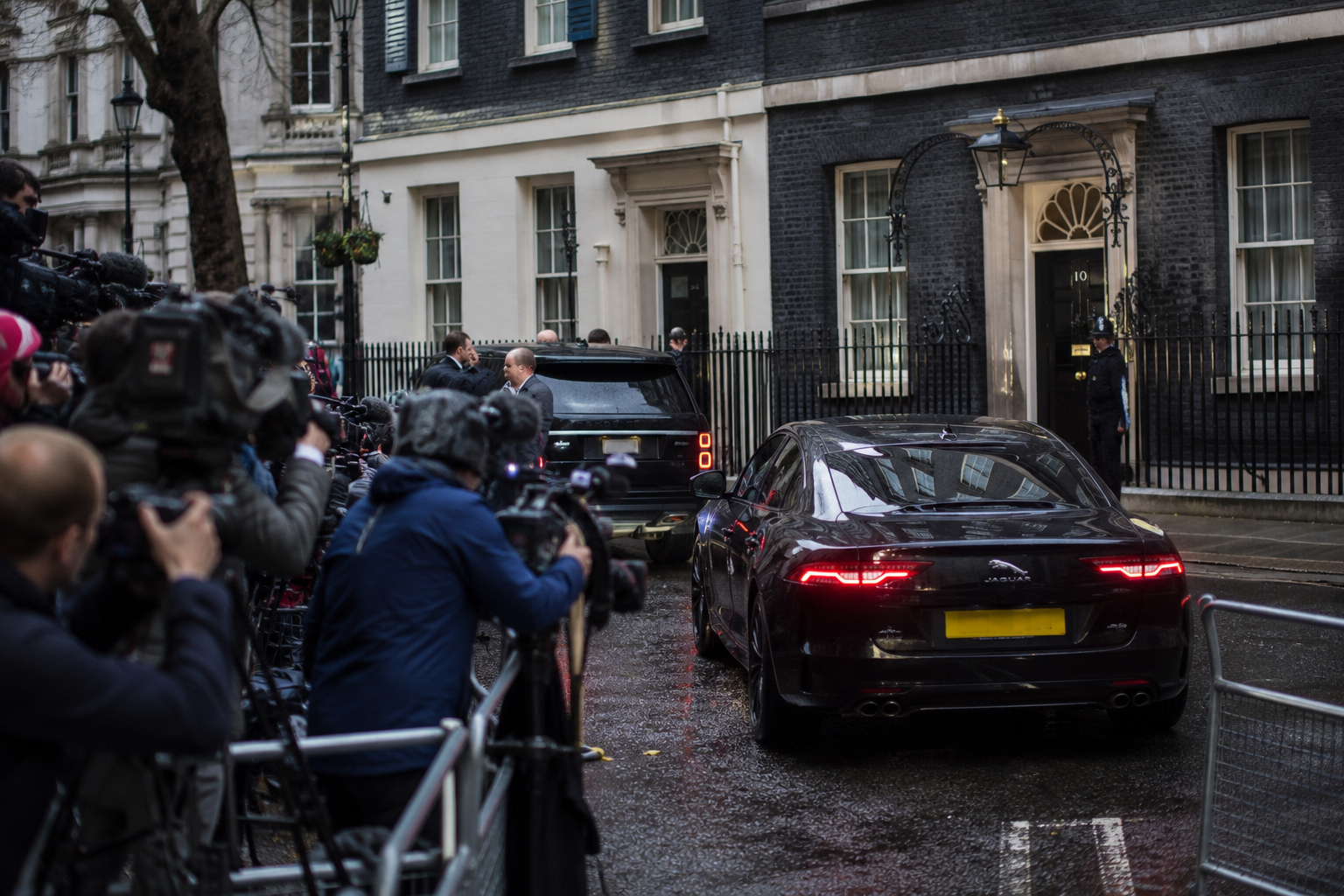
The story of modern UK prime ministers is starting to feel less like a tradition of stable leadership and more like a political revolving door. In just 10 years, Britain has burned through leader after leader at a pace that would once have seemed extraordinary. Prime ministers are no longer expected to settle into office, build a long political legacy, and guide the country through several years of steady rule. Instead, they are being pushed out early by party panic, collapsing authority, and a political system that now seems permanently restless.
That is what makes the current crisis around UK prime ministers so striking. Britain is not changing leaders because voters are constantly holding fresh general elections. In many cases, prime ministers are being forced out by their own parties long before the public gets another chance to decide. The result is a country that still looks stable on paper, but increasingly unstable in practice.
This is not just a story about individual mistakes or bad luck. It is a story about Brexit, internal party rebellion, weak public trust, and a style of politics that now seems to consume leaders faster than it used to. To understand why UK prime ministers now appear to change every few years, it helps to look at what changed after 2016 and why the job itself has become much harder to hold.
Britain Did Not Always Change Prime Ministers This Quickly
For much of modern British political history, prime ministers were expected to last. Some lost power early, of course, but long stretches of stable leadership were not unusual.
Think of Margaret Thatcher, who stayed in office for 11 years, or Tony Blair, who led the country for about 10 years. Even leaders who became unpopular often had enough time to recover, reset their message, or fight another election before being forced out.
That older pattern matters because it shows how unusual the current moment really is. The rapid churn of UK prime ministers is not normal British politics. It is a sharp break from the way Westminster worked for decades.
Since David Cameron resigned in 2016 after the Brexit referendum, the pace of leadership change has accelerated dramatically. Britain has moved from relatively stable prime ministerial tenures to an era where leaders can rise and fall in what feels like political fast-forward.
Brexit Changed Everything for UK Prime Ministers
If there is one event sitting at the heart of the current instability, it is Brexit.
The referendum did more than change Britain’s relationship with Europe. It fractured political parties, reshaped voter loyalties, and created a permanent pressure point inside Westminster. From that moment on, UK prime ministers were no longer just trying to govern. They were trying to survive in a political environment that had become more emotional, more divided, and much harder to manage.
Brexit Turned Leadership Into a Test of Party Survival
Brexit created a problem that no prime minister could solve cleanly. Every path came with a political price.
- Move too slowly, and one side accused you of betrayal
- Move too quickly, and another side warned of economic damage
- Try to compromise, and both camps attacked you
That left UK prime ministers trapped between governing the country and holding their own parties together. It turned leadership into a constant balancing act, where every major decision risked triggering a revolt.
It Also Made Prime Ministers Easier to Remove
Before Brexit, party rebellions could still be serious, but they were often manageable. After Brexit, internal conflict became much more intense. Leaders were no longer judged only on whether they were effective in office. They were judged on whether they represented the “real” direction of the party.
Once MPs and ministers decided a leader had become a problem rather than a solution, the pressure could build very quickly. That made UK prime ministers far more vulnerable to losing power midstream.
UK Prime Ministers Are Now More Vulnerable to Their Own Parties
One of the biggest reasons UK prime ministers keep changing is that the main threat often does not come from the opposition. It comes from inside their own party.
Britain’s parliamentary system allows parties to remove their leaders without calling a general election. That means a prime minister can enter Downing Street after a national victory and still lose office later if their own MPs decide they are no longer the right person for the job.
In theory, that system gives parties flexibility. In practice, it has become a source of repeated instability.
When a prime minister’s popularity drops, or when cabinet resignations start piling up, the party can move from nervousness to open panic very quickly. Once enough MPs believe the leader is dragging everyone down, the pressure becomes relentless. Timelines collapse, authority weakens, and another leadership contest begins.
This is one of the biggest structural reasons UK prime ministers now seem so fragile. They do not only have to defeat the opposition. They have to survive their own side every day.
The Job of Prime Minister Has Become Harder to Hold
The office itself has also become much more difficult.
Modern UK prime ministers operate in a political environment that is faster, harsher, and less forgiving than the one many of their predecessors faced. Public trust is weaker. Social media amplifies every crisis. Economic pressures are heavier. And party discipline is no longer what it once was.
That means the prime minister now sits at the center of several pressures at once:
- A restless parliamentary party
- A relentless media cycle that never really slows down
- Voters who switch loyalties more easily
- Big policy problems with no quick fixes
- Rising pressure from populist and outsider movements
The result is a job that can look powerful from the outside but feel deeply unstable from the inside. A prime minister may still hold enormous formal authority, but if the party loses confidence, that authority can disappear with surprising speed.
Voters Are More Fragmented, and That Makes Leadership Harder
Another major reason UK prime ministers are struggling to last is that British politics is no longer as simple as it used to be.
For decades, the UK largely operated within a strong two-party rhythm. Labour and the Conservatives dominated national politics, and while there were tensions inside both parties, voter loyalties were more predictable.
That has changed.
The rise of Reform UK, the long aftershocks of Brexit, regional political divides, and wider frustration with mainstream politics have all made the landscape more volatile. Prime ministers now face pressure not just from the official opposition, but from a wider mix of political anger and voter drift.
That matters because leaders are judged not only on whether they can govern, but on whether they can stop voters from abandoning the party. If they cannot, fear starts building inside the parliamentary ranks. And once that fear takes hold, the future of UK prime ministers can become very short.
Constant Leadership Churn Is Hurting Britain Too
The repeated turnover of UK prime ministers is not just awkward for Westminster. It has real consequences for how the country is governed.
When leaders keep changing, governments struggle to maintain long-term focus. Every new prime minister arrives with a new set of priorities, new advisers, and usually a reshuffled cabinet. Policies get delayed, rewritten, or quietly dropped. Civil servants have to adjust all over again. Ministers move jobs before they fully understand them. Long-term planning becomes harder.
That creates a damaging cycle:
- A prime minister loses authority
- The party turns inward and focuses on survival
- Government slows down or changes direction
- Public frustration grows
- The next prime minister inherits an even harder job
This is why the churn of UK prime ministers matters so much. It is not only about who lives in 10 Downing Street. It is about whether the British state can keep delivering serious policy in a country facing economic pressure, strained public services, and a deeply unsettled political culture.
Why This Feels Different From Normal Democratic Change
Every democracy changes leaders. That alone is not a crisis. What makes the current British moment unusual is the speed, frequency, and cause of the turnover.
Britain is not just replacing leaders after long periods in office or after clear electoral defeat. It is replacing them midstream, often because their own parties decide they can no longer survive under them.
That creates a sense that UK prime ministers are becoming temporary figures rather than durable national leaders. Instead of planning for a full term, they are constantly managing internal threats, testing party loyalty, and trying to avoid becoming the next casualty of Westminster chaos.
In other words, the instability is no longer just a side effect of politics. It is becoming one of the defining features of politics itself.
6 Big Reasons the UK Keeps Changing Prime Ministers
The current churn did not come from one single failure. It came from several pressures stacking on top of each other.
1. Brexit shattered the old political balance
The referendum split parties, voters, and Parliament in ways that still have not fully settled.
2. Parties can remove leaders without a general election
That makes UK prime ministers vulnerable to internal revolts long before voters return to the polls.
3. Public trust has weakened
Leaders now have less room to recover from mistakes before panic sets in.
4. Party discipline is weaker than it used to be
MPs are more willing to turn on leaders they think are becoming an electoral liability.
5. The political and media cycle moves much faster
Every controversy becomes louder, bigger, and harder to contain.
6. Britain’s biggest problems are hard to solve quickly
Growth, housing, public services, immigration, and the cost of living all create pressure on governments that already feel unstable.
Can Britain Break This Cycle?
The big question now is whether this pattern of short-lived UK prime ministers is just a temporary phase or a sign of something deeper inside British politics.
There is no simple fix. Some of the causes are structural, especially the way party leadership works inside Parliament. Others are cultural, including the growing impatience of parties and the breakdown of trust between leaders and voters. And some are the result of governing a country that has become more divided, more anxious, and more politically fragmented since Brexit.
Still, stability is not impossible. A prime minister who can rebuild party discipline, restore trust, and offer a clearer long-term story for the country could slow the cycle down. But that would require more than tactical survival. It would require a leader with enough authority to hold their party together while persuading the public that government still has direction.
Right now, that is exactly what Britain seems to be missing.
Final Thoughts
The rapid turnover of UK prime ministers is not just another Westminster drama. It is a warning sign about the condition of British politics itself. Since 2016, the country has been caught in a cycle of leadership churn driven by Brexit, party rebellion, public frustration, and a political system that now seems much quicker to consume its own leaders.
That is why the real question is bigger than who becomes prime minister next. The deeper issue is whether Britain can still produce leaders who are strong enough to last, govern, and build something beyond short-term survival.
For now, the record of recent UK prime ministers suggests a system under strain rather than a country at ease with normal democratic change. And until that deeper instability is addressed, 10 Downing Street may continue to feel less like the seat of long-term power and more like a temporary holding office.
Read Other Interesting news here: US Iran Peace Deal
