

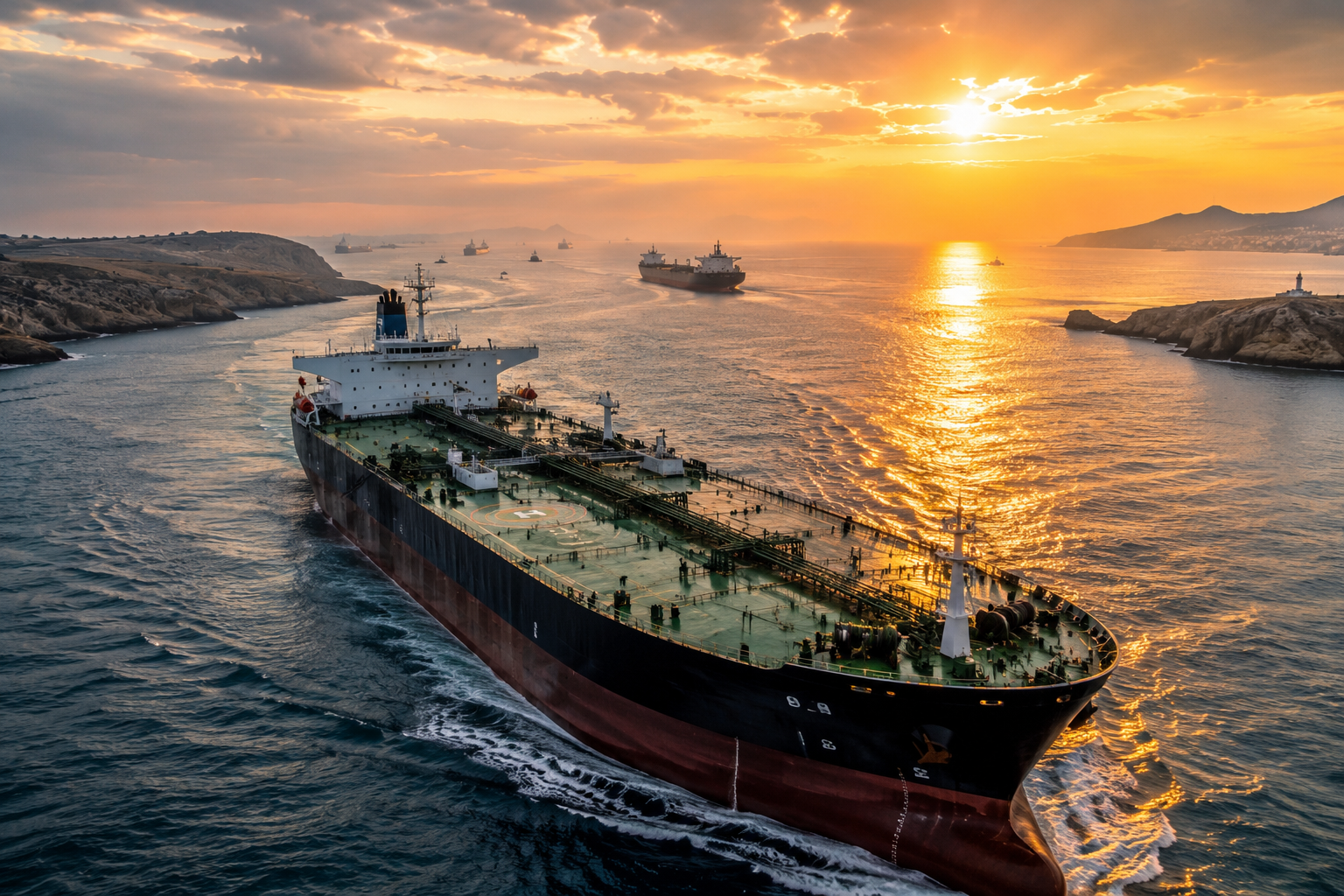
The new US Iran peace deal has already started changing the global oil story, and not in a small way. After months of war, shipping fears, and energy market chaos, Washington and Tehran are now trying to move toward a fragile diplomatic path that could reshape oil flows across the Gulf. At the center of that shift is one crucial development: the United States has granted temporary relief on Iranian oil sanctions, opening the door for more crude to reach the market while wider peace talks continue.
That is why this US Iran peace deal matters far beyond politics. It is not just about two longtime rivals stepping back from conflict. It is also about whether the Strait of Hormuz can stay open, whether Iranian oil can move more freely again, and whether the oil market can finally breathe after weeks of pressure.
For traders, refiners, and governments, this is no longer just a diplomatic headline. It is a market-moving story with real consequences for supply, prices, and regional stability.
Why This US Iran Peace Deal Matters So Much
The biggest reason the US Iran peace deal matters is simple: it changes the balance of fear in the oil market.
For months, the market had been trading around one central question — would the Strait of Hormuz stay blocked, unstable, or too dangerous for normal shipping? Since that narrow waterway handles a major share of global oil and liquefied natural gas flows, any threat there immediately sends shockwaves through energy prices.
Now the US Iran peace deal has introduced a very different possibility. Instead of pricing in only disruption, traders now have to consider the return of Iranian barrels, a partial recovery in shipping through Hormuz, and a possible reduction in war-related supply risks.
That does not mean the danger is gone. But it does mean the story has changed. The market is no longer reacting only to fear. It is reacting to a complicated mix of relief, caution, and fresh uncertainty.
The 60-Day Oil Sanctions Relief Is the First Big Shift
At the heart of the US Iran peace deal is a 60-day waiver that temporarily eases restrictions on Iranian oil sales. This is one of the most important early developments because it creates immediate room for Iran to move crude more freely while both sides continue negotiating over deeper political and nuclear issues.
This is not a full and permanent end to sanctions. It is a temporary opening. But even a temporary opening matters when the country involved is Iran and the sector involved is oil.
The reported waiver covers more than just the sale of crude. It also extends to related parts of the oil trade, including transport, insurance, banking, and dollar transactions. That makes it much more meaningful than a symbolic gesture. It gives the US Iran peace deal real weight in the energy market.
Why the Sanctions Waiver Matters for Iran
For Tehran, the oil waiver is more than just a political concession. It is a direct economic opportunity.
Iran’s oil sector has been under heavy pressure from sanctions, so even a short period of easier trade can make a noticeable difference. It can improve export volumes, increase cash flow, and give Tehran more leverage as negotiations continue.
The timing matters too. Iran enters the next phase of talks with something tangible in hand, not just promises of future relief. That makes the US Iran peace deal more than a diplomatic announcement from Iran’s point of view. It becomes a real opening to rebuild some oil trade momentum.
Why the Sanctions Waiver Matters for Washington
For the United States, the same waiver serves a different purpose. It is a negotiating tool.
Washington gets to show flexibility without tearing down its sanctions structure all at once. In other words, the US Iran peace deal allows the US to create diplomatic breathing room while still keeping pressure on Tehran over the unresolved issues that matter most, especially nuclear inspections, uranium limits, and regional security.
That balance is important. The US is trying to lower immediate tensions without giving away all of its leverage upfront. The 60-day relief window does exactly that.
The Strait of Hormuz Is Still the Real Pressure Point
If the oil waiver is the first major shift, the Strait of Hormuz may be the most important part of the bigger story.
The strait is one of the world’s most critical energy chokepoints. A huge share of global seaborne crude and LNG flows through it, which means every disruption there has international consequences. During the conflict, the strait became one of the main reasons oil prices surged and shipping nerves exploded.
That is why the US Iran peace deal is so closely tied to Hormuz. A peace framework that cannot stabilize the strait will struggle to calm the oil market in a lasting way.
Iran and Oman are expected to continue talks on navigation and maritime services in Hormuz, and that matters because safe passage is now one of the most practical tests of whether this peace process is working.
Shipping Is Improving, but It Is Not Back to Normal
There are already signs that some shipping traffic is returning through the Strait of Hormuz, and that is one reason oil prices have eased. But it would be a mistake to assume the situation is fully stable again.
The strait is still dealing with the after-effects of conflict. There are ongoing concerns about infrastructure damage, congestion, insurance costs, and the wider security environment. Shipping companies do not return to full confidence overnight, especially after a period of disruption.
That is why the US Iran peace deal has improved sentiment without fully removing uncertainty. The route is more open than it was during the peak of the crisis, but it is not yet operating as if the danger has completely passed.
Iranian Oil May Return, but Buyers Are Still Careful
One of the most interesting parts of the US Iran peace deal is that it does not automatically guarantee a rush of buyers for Iranian crude.
Even with temporary sanctions relief, many Asian refiners have reportedly shown only limited interest so far. There are several reasons for that caution. Some already secured alternative crude supplies during the conflict. Others remain hesitant because the waiver is temporary and the political situation could change again if talks break down.
This matters because it shows that the US Iran peace deal may be opening the door for more oil, but the market still needs confidence before it walks fully through it.
China Could End Up as the Biggest Winner
If there is one buyer likely to benefit most from the US Iran peace deal, it may be China.
Independent Chinese refiners have long been important buyers of Iranian crude, and that could continue under the current arrangement. While other Asian buyers remain cautious, Chinese demand may once again become the main outlet for additional Iranian barrels.
That makes China a central part of the oil story. The peace deal may have been struck between Washington and Tehran, but the actual market impact could depend heavily on how much Iranian crude ends up flowing east.
In that sense, the US Iran peace deal is not just a US-Iran story. It is also a story about how Asian energy demand, Gulf shipping, and global crude pricing all connect.
Oil Prices Are Responding to Relief, Not Just Supply
Another major effect of the US Iran peace deal is psychological. It has changed the mood in oil markets.
Prices have eased because traders are no longer reacting only to war risk. They are now also reacting to the possibility of more Iranian oil supply and a more stable Strait of Hormuz. That shift matters because oil prices are often driven as much by perceived risk as by physical barrels.
Still, several big questions remain:
- Will the 60-day sanctions waiver be extended?
- Will Hormuz stay stable enough for full shipping confidence to return?
- Can the US and Iran settle their nuclear disputes during the negotiation window?
- Will buyers trust the relief enough to commit to long-term purchases?
Those questions explain why the US Iran peace deal has lowered some pressure in the market without removing uncertainty completely.
The Peace Deal Is Bigger Than Oil Alone
It would be too narrow to treat the US Iran peace deal as just an oil story. Oil is the most visible market effect, but the deal is part of a much broader diplomatic process.
The current framework creates a 60-day negotiation window during which both sides are expected to work through deeper disputes. Those include:
- Iran’s nuclear programme
- Inspection arrangements
- Frozen Iranian assets
- Longer-term sanctions relief
- The future management of the Strait of Hormuz
That means the current agreement is not the final chapter. It is a bridge. It gives both sides time to lower immediate tensions while trying to build something more durable underneath.
5 Major Oil Shifts Triggered by the US Iran Peace Deal
The current deal has already triggered five clear changes in the energy picture.
1. Iranian oil has a temporary path back into the market
The 60-day sanctions waiver gives Iran a short-term opening to sell crude more freely and reconnect with buyers.
2. The Strait of Hormuz is moving from panic to managed risk
The strait is not fully normal again, but the conversation has shifted away from complete disruption and toward controlled recovery.
3. China may become the key buyer once again
With many refiners still cautious, Chinese demand could remain the main home for additional Iranian crude.
4. Oil prices are losing part of their war premium
The market is no longer trading purely on blockade fears. Diplomacy is now shaping sentiment too.
5. Energy markets are now tied to a 60-day political clock
Every update in the US Iran peace deal will influence how traders think about supply, sanctions, and shipping risk for the rest of the summer.
What Could Still Go Wrong
For all the optimism around the US Iran peace deal, the risks are still serious.
The biggest problem is that the deal is not complete. The hardest disputes between Washington and Tehran have not been solved yet. If the nuclear track stalls, if regional violence flares again, or if the strait becomes unstable, the current relief could fade quickly.
There is also a trust issue. Buyers, insurers, and shipping firms do not only need legal permission to move. They need confidence that the rules will not suddenly change again. That is why so many players are still moving carefully, even after the deal.
The market has welcomed the diplomatic shift, but it has not fully trusted it yet.
Final Thoughts
The US Iran peace deal has already changed the oil conversation of the summer. By pairing a temporary sanctions waiver with fresh efforts to stabilize the Strait of Hormuz, it has given the market something it desperately needed: a reason to think the worst supply fears might ease instead of deepen.
That does not mean the hard part is over. Iranian buyers are still cautious, Hormuz traffic is still recovering, and the most sensitive political disputes are still unresolved. In many ways, this agreement feels less like a final peace and more like a high-stakes pause.
Still, the significance of the US Iran peace deal should not be underestimated. It has already pushed diplomacy, shipping, and energy markets into a new phase. If the next 60 days bring real progress, this could become one of the most important oil turning points of the year. If they do not, the current calm may prove temporary.
For now, the market is watching every tanker, every statement, and every negotiation round. That alone shows how much this story matters.
Read Other Interesting news here: Europe Heatwave
