

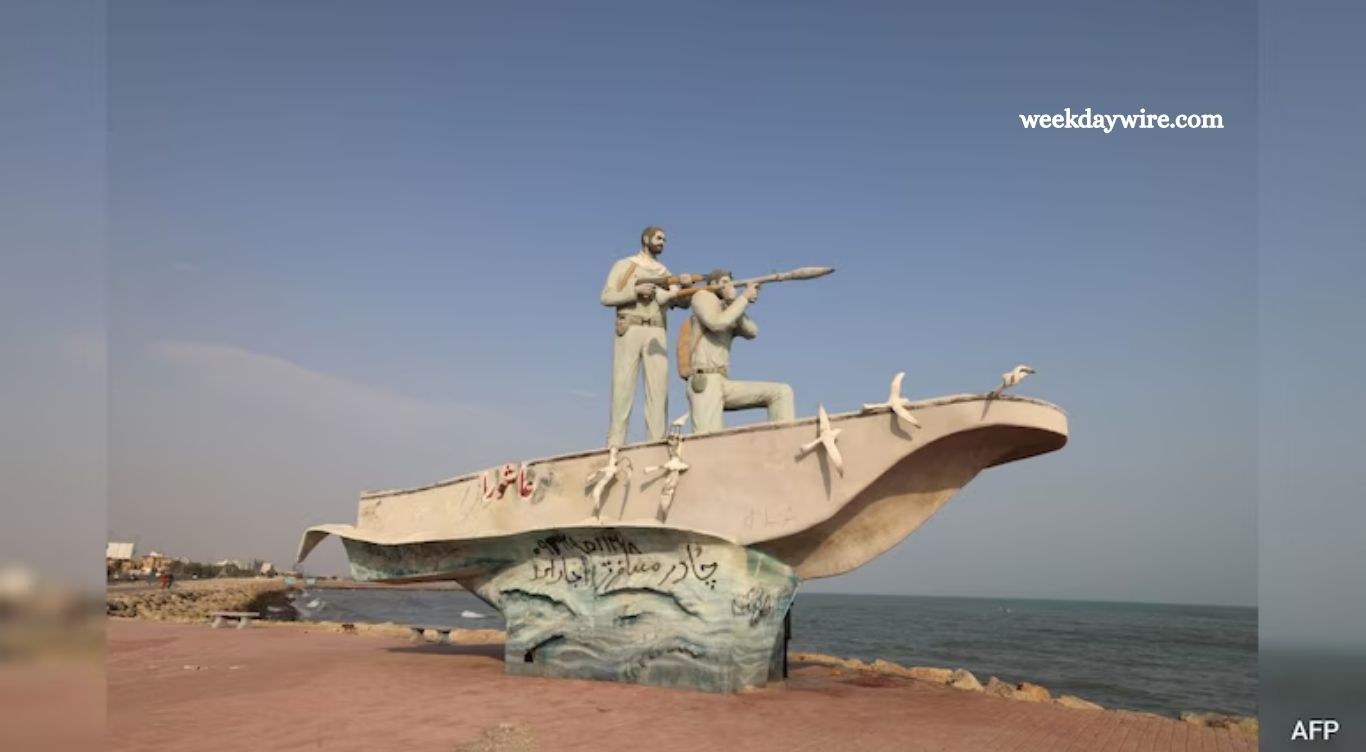
The Strait of Hormuz has long represented one of Iran’s most important sources of strategic influence in the Middle East. Connecting the Persian Gulf with the Gulf of Oman and the Arabian Sea, the narrow waterway plays a central role in international energy transportation. Any serious disruption there can affect oil supplies, shipping costs, insurance rates, and global energy markets.
Recent developments, however, suggest that Iran may be finding it increasingly difficult to exercise effective control over maritime traffic. US President Donald Trump has claimed that the strait remains open, Iranian-laid mines have been removed or destroyed, and American naval operations continue to protect shipping. Meanwhile, changing vessel routes and growing use of waters closer to Oman appear to be challenging Tehran’s ability to dictate how commercial ships navigate the region.
Read More: China’s Backflipping Robots Make Blockbuster Stock Market Debut
Trump Claims the Strait Remains Open
President Trump recently posted a map portraying the Strait of Hormuz as American territory while claiming that the United States had established greater control over the strategically important passage. Such a sovereignty claim would be politically and legally contentious, but the message reflects Washington’s broader effort to demonstrate maritime dominance during the continuing conflict with Iran.
Trump also stated that water mines placed in the strait had been removed or detonated. According to his remarks, the US naval blockade remains active while commercial movement through Hormuz continues. These claims are intended to reassure international shipping companies and energy markets that the passage can operate despite Iranian threats.
The practical question is not simply which government claims control. Effective maritime control depends on whether a country can influence shipping routes, restrict unwanted traffic, impose costs, or prevent vessels from operating without its approval. Recent shipping patterns indicate that Iran may be struggling in several of these areas.
Shipping Traffic Challenges Iran’s Influence
Maritime tracking data cited in reports indicate that dozens of commercial vessels have continued travelling through the Strait of Hormuz despite Iranian attempts to influence traffic. At least 95 vessels reportedly crossed the strait during one recent week, following 118 vessels the previous week.
A significant majority of vessels recorded during that period reportedly travelled through the Omani side of the waterway rather than following routes preferred by Tehran. This shift matters because Iran has historically relied on its geographical position along the northern side of Hormuz to exert pressure on commercial shipping.
Greater use of the Omani route could therefore weaken Iran’s ability to regulate traffic effectively. Shipping companies may increasingly calculate that travelling closer to Oman, particularly with US naval protection available, presents a more practical option than complying with Iranian demands.
Omani Route Changes Maritime Dynamics
The growing importance of the Omani shipping route represents one of the biggest changes in the current situation. Earlier in the conflict, relatively little commercial traffic reportedly used this route. More recent maritime data suggests the pattern has changed considerably.
Ships choosing the alternative route can reduce their exposure to Iranian demands while maintaining access between the Persian Gulf and international waters. This is particularly significant for energy exporters that depend on reliable access to global markets.
Iran has reportedly opposed increased use of the Omani route and has attempted to discourage ships from bypassing areas where Tehran exercises greater influence. Nevertheless, continued commercial traffic suggests that shipping operators are increasingly prepared to accept those risks, especially when US forces offer protection.
This creates a difficult strategic problem for Tehran. Iran can threaten vessels, but aggressive action against international shipping could trigger stronger military responses while increasing political pressure from regional governments dependent on Hormuz.
Transit Fees Become Another Source of Dispute
Control over Hormuz also carries potential financial importance. Iran has sought to collect transit payments from vessels moving through areas where it claims authority. Such fees could provide revenue while reinforcing Tehran’s claim that it retains effective control over the passage.
The growing use of the Omani route makes that strategy more difficult. Ships avoiding Iran’s preferred channel can potentially pass through Hormuz without paying Tehran’s requested charges.
For Gulf states and international shipping companies, this provides a strong economic reason to consider alternative navigation arrangements. Even when security risks remain, operators must balance those dangers against additional costs, delays, and political complications associated with Iranian requirements.
If Tehran cannot enforce its toll demands consistently, its claim of controlling maritime traffic becomes harder to sustain. Control of a strategic chokepoint ultimately depends on practical enforcement rather than political declarations alone.
Dark Shipping Complicates the Picture
Another important development involves so-called dark shipping. Major Gulf oil producers, including Saudi Arabia, Kuwait, and the United Arab Emirates, have reportedly relied on Very Large Crude Carriers to transport substantial quantities of petroleum through Hormuz.
Some tankers have reportedly switched off their automatic identification system transponders for extended periods. These systems normally allow maritime authorities and commercial tracking platforms to monitor a vessel’s identity, position, direction, and speed.
Operating without active transponders makes commercial vessels significantly more difficult for public tracking services to follow. Once outside the most dangerous waters, large tankers can transfer oil or continue toward international customers.
This means publicly available vessel-tracking figures may underestimate the actual volume of petroleum moving through Hormuz. The existence of substantial untracked traffic would also indicate that Gulf exporters have developed methods to maintain energy shipments despite Iranian pressure.
Gulf Oil Producers Adapt to Security Risks
Saudi Arabia, Kuwait, and the United Arab Emirates have powerful economic incentives to keep Hormuz operating. Their economies remain closely connected to energy exports, making prolonged disruption extremely costly.
Instead of depending entirely on one conventional shipping pattern, Gulf producers appear to be adapting their logistics. Large tankers, alternative routes, offshore transfers, pipelines, and naval protection can all reduce exposure to Iranian restrictions.
These measures cannot eliminate the strategic importance of Hormuz. Geography ensures that the strait will remain critical to Gulf energy exports. However, they can reduce Iran’s ability to use that geography as an effective political and military weapon.
The more successfully regional exporters adapt, the harder it becomes for Tehran to translate its position along the strait into complete operational control.
Oil Flows Move Closer to Pre-War Levels
Perhaps the most significant indicator involves the volume of oil reaching international markets. Before the conflict, roughly 20 million barrels of petroleum products and crude oil moved through the Strait of Hormuz each day under normal conditions.
US Energy Secretary Chris Wright recently said combined oil movements through Hormuz and supplies rerouted around the waterway had reached approximately 15 million barrels per day during one recent week.
That figure remains below typical pre-war volumes, but it suggests energy transportation has recovered substantially despite continuing military risks. Greater shipping activity could also reduce fears of prolonged global supply shortages.
For energy markets, continued movement matters more than political claims regarding who controls the waterway. If oil exporters can consistently transport millions of barrels despite Iranian opposition, Tehran’s practical leverage over global energy flows becomes weaker.
Iran Still Retains Significant Capabilities
Evidence of weakening control should not be interpreted as proof that Iran has lost all influence over Hormuz. Its geographical position, coastal military infrastructure, missiles, naval forces, drones, and ability to threaten commercial vessels continue to make it an important regional actor.
Even limited attacks can increase insurance premiums, force shipping companies to reconsider routes, and create uncertainty in global energy markets. A single major maritime incident could quickly change commercial calculations.
The emerging situation therefore appears less like complete American control and more like a contest over practical influence. Washington may have improved its ability to protect commercial traffic, while Iran still retains tools capable of making navigation dangerous and expensive.
Frequently Asked Questions
Why is the Strait of Hormuz important?
It is a major global shipping route for crude oil, petroleum products, and liquefied natural gas.
Is Iran losing control of the Strait of Hormuz?
Recent shipping patterns suggest Iran may be losing some practical influence over vessel movements through the strategic waterway.
Why are ships using the Omani route?
Ships may use routes closer to Oman to reduce exposure to Iranian restrictions, fees, and security threats.
How does US naval presence affect Hormuz?
US naval operations can provide security for commercial vessels and limit Iran’s ability to restrict maritime traffic.
What is dark shipping in the Strait of Hormuz?
Dark shipping generally refers to vessels operating with tracking systems disabled or limited, making their movements harder to monitor.
Can Iran still disrupt shipping through Hormuz?
Yes. Iran retains military capabilities that could threaten vessels, increase shipping costs, and create uncertainty across energy markets.
Could reduced Iranian control affect global oil markets?
Yes. More reliable shipping through Hormuz could reduce supply concerns, although continued conflict may still cause oil-price volatility.
Conclusion
The Strait of Hormuz remains one of the world’s most strategically important waterways, but Iran’s ability to exercise complete control appears increasingly challenged. Growing use of alternative shipping routes, continued US naval involvement, resistance to Iranian transit demands, and changing tanker operations are reshaping maritime activity across the region.
