

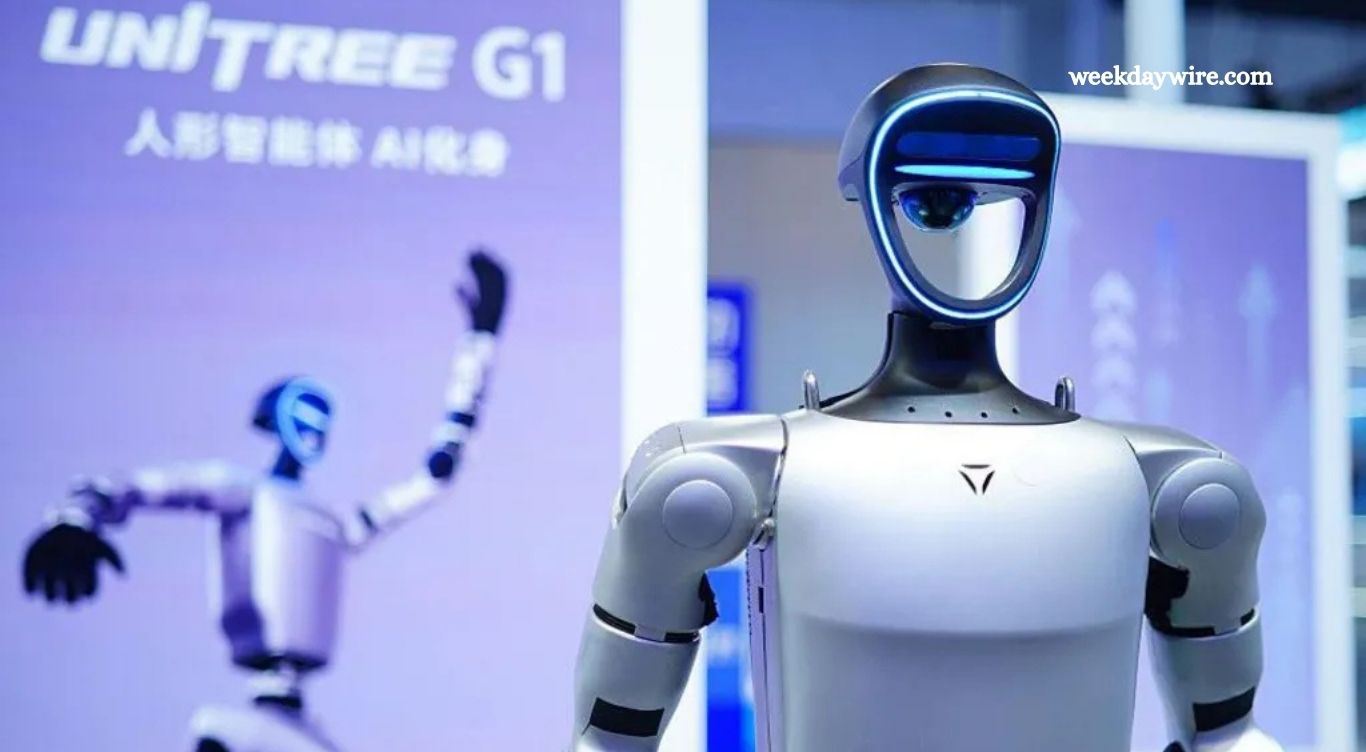
Chinese robotics giant Unitree Robotics made a remarkable entrance into the stock market, drawing global attention to China’s rapidly expanding humanoid robotics sector. Shares of the company surged more than 460% during their first day of trading in Shanghai, highlighting strong investor enthusiasm for businesses connected to artificial intelligence, automation, and advanced robotics.
Unitree shares were initially offered at 150.80 yuan each before closing their first trading session at 845 yuan. The listing on Shanghai’s technology-focused Star Market represents an important milestone for the company and China’s broader technology ambitions. It also comes as competition between China and the United States intensifies across artificial intelligence, robotics, semiconductors, and other strategic technologies.
Unitree Makes a Powerful Shanghai Market Debut
Unitree’s dramatic first-day performance demonstrated the level of investor interest surrounding humanoid robotics. The Star Market, often compared with the Nasdaq because of its focus on innovative technology companies, provides an important platform for Chinese businesses developing emerging technologies.
Read More: Why Iran Could Be Losing Control of the Strait of Hormuz
Although other Chinese humanoid robotics companies have previously entered public markets, Unitree’s listing represents a particularly significant moment for mainland China. Its strong debut could encourage other robotics manufacturers to pursue public offerings while providing them with a potential valuation benchmark.
What Is Unitree Robotics?
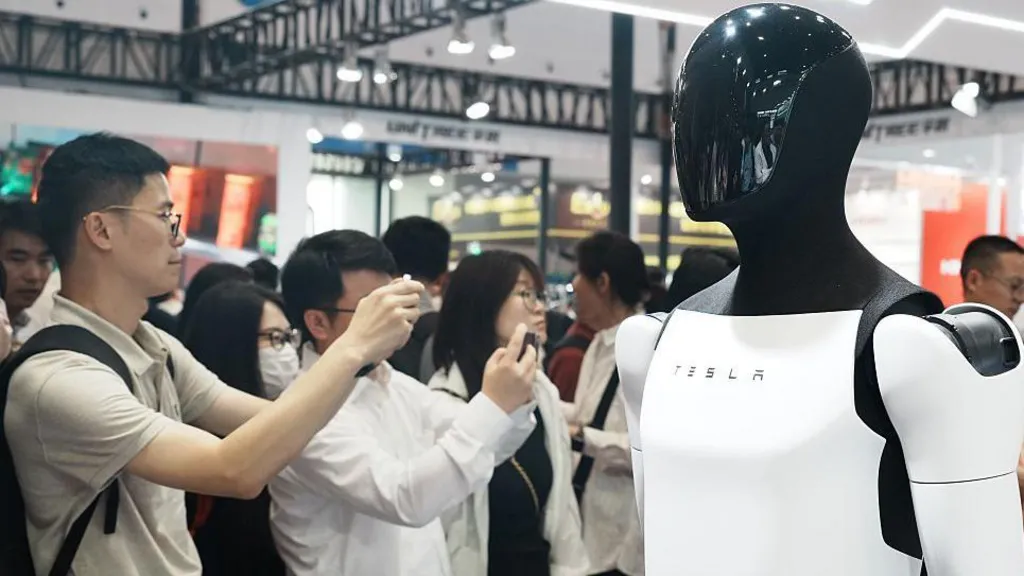
Unitree, officially known as Yushu Technology Co Ltd., was founded in 2016 and is headquartered in Hangzhou in eastern China. The company has developed a broad range of robotics products, including sensors, robotic arms, quadruped robot dogs, and humanoid machines.
The company has grown rapidly as worldwide demand for advanced robotics increases. Unitree reportedly shipped more than 5,500 humanoid robots last year. Unlike many companies operating in the emerging humanoid robotics sector, Unitree has also demonstrated an ability to generate profits, reporting net profit of 278 million yuan in 2025.
Lower Prices Strengthen Unitree’s Competitive Position
Pricing has become one of Unitree’s biggest competitive advantages. Chinese manufacturers have increasingly demonstrated an ability to develop sophisticated technology while keeping manufacturing costs relatively low. This approach could help Unitree reach industrial customers, research organizations, universities, and eventually broader consumer markets.
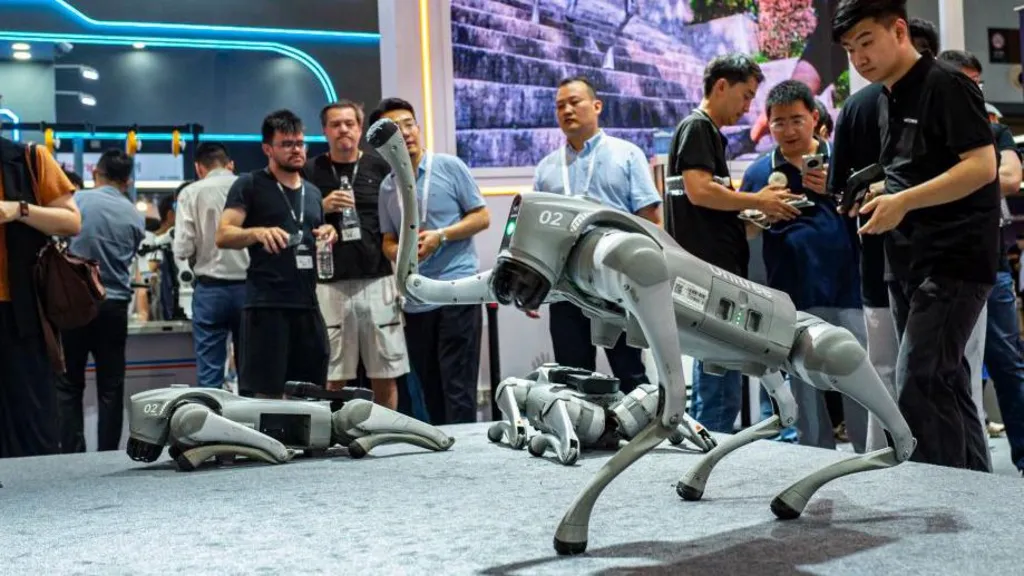
Unitree robot dogs, for example, start at around $2,700, while Boston Dynamics’ Spot carries a significantly higher price. Direct comparisons have limitations because the products differ in size, capabilities, and intended applications. Still, the substantial pricing gap demonstrates why Chinese robotics companies are attracting attention from customers and investors.
Humanoid Robots Become a Major Investment Opportunity
Industrial robots have operated inside factories for decades, while automated machines are now common across warehouses and homes. Humanoid robots represent the next stage of this development because they are designed to navigate environments originally built around human movement.

Major corporations are investing heavily in the technology. Tesla is developing its Optimus humanoid robot, while Amazon has explored humanoid machines for warehouse operations. Chinese manufacturers, including Unitree, are simultaneously moving quickly toward commercial production and wider deployment.
The long-term opportunity could extend far beyond manufacturing. Developers envision robots assisting in hospitals, logistics facilities, retail environments, hazardous workplaces, and eventually homes. Artificial intelligence advances could make these machines increasingly capable of understanding instructions, recognizing objects, navigating unfamiliar environments, and completing complicated physical tasks.
China Builds a Powerful Robotics Ecosystem
China has identified robotics as an important strategic industry. Hangzhou and other technology centers have developed strong networks of manufacturers, suppliers, software developers, engineers, and research institutions. Government investment has further supported the development of this ecosystem.
Robotics could also help China respond to demographic challenges. An ageing population and potential workforce shortages may increase demand for machines capable of performing repetitive, physically demanding, or dangerous jobs. Factories, hospitals, logistics centers, and care facilities could become important early markets.
Artificial intelligence makes this transformation particularly significant. Traditional industrial robots generally perform predetermined actions inside controlled environments. AI-powered humanoid robots could potentially learn new tasks and adapt to changing surroundings, allowing them to operate across a much wider range of workplaces.
Unitree G1 Highlights Rapid Technology Development
Unitree began selling humanoid robots in 2023 and later introduced its child-sized G1 model at approximately $13,500. The machine has helped demonstrate how quickly affordable humanoid technology is developing.
Unitree has also generated widespread publicity through public demonstrations. Its G1 robots attracted attention after performing martial arts movements during China’s Spring Festival Gala. Such demonstrations serve as more than entertainment because they showcase improvements in balance, coordination, movement, and control.
Unitree robots are also participating in the 2026 World Humanoid Robot Games in Beijing. Competitions include running, football, object handling, package opening, and book sorting. These events provide developers with opportunities to demonstrate how robots perform physical and practical tasks under challenging conditions.
Stock Listing Could Become an Industry Benchmark
Unitree’s public-market performance may influence how investors value other robotics businesses. Humanoid robotics remains a relatively young industry, making it difficult to determine how quickly commercial demand will grow or which manufacturers will ultimately dominate.
A successful publicly traded company provides investors with a clearer reference point for evaluating revenue, profitability, manufacturing capacity, and future growth. Other Chinese robotics manufacturers may consequently consider stock market listings as they seek capital for research, production facilities, and international expansion.
UBTech Robotics entered the Hong Kong market earlier, while companies such as Leju Robotics and AgiBot have also attracted industry attention. More public listings could transform humanoid robotics from a venture-capital-driven sector into a larger mainstream investment category.
Major Challenges Remain for Humanoid Robots
Despite widespread optimism, significant technical obstacles remain. Humanoid robots still struggle with battery endurance, reliability, safety, complex environments, and the ability to perform varied tasks consistently. Privacy may become another concern when robots equipped with cameras and sensors operate inside workplaces or homes.
Factories and commercial environments are therefore likely to remain the most practical markets in the near term. These settings are more predictable and allow companies to deploy robots for clearly defined tasks. Home environments are considerably more complicated because robots must interact safely with people, pets, furniture, stairs, and constantly changing surroundings.
Manufacturers will need to improve hardware, software, AI capabilities, energy efficiency, and safety before general-purpose household humanoid robots become commonplace.
China-US Robotics Competition Intensifies
Robotics has become another major area of technological competition between China and the United States. Both countries view artificial intelligence and robotics as technologies capable of influencing future economic productivity, manufacturing strength, and national competitiveness.
American companies remain major innovators. Tesla is developing Optimus and has discussed using its manufacturing infrastructure to produce humanoid robots. Amazon continues researching advanced warehouse robotics, while Boston Dynamics plans further deployment of humanoid machines in industrial environments.
Chinese companies, however, possess significant advantages in manufacturing scale, supply chains, component production, and competitive pricing. Unitree’s rapid commercial development illustrates how those advantages can help Chinese companies bring sophisticated robotics products to market quickly.
Future of the Global Robotics Industry
The race to commercialize humanoid robots is still developing, and determining a clear winner remains difficult. American companies maintain strengths in artificial intelligence, software, research, and advanced engineering, while Chinese manufacturers benefit from extensive supply chains, manufacturing expertise, competitive costs, and growing domestic demand.
Unitree’s extraordinary stock market debut demonstrates investor confidence in the potential of this emerging industry. Whether current enthusiasm translates into sustainable long-term growth will depend on the company’s ability to increase production, maintain profitability, improve its technology, and find practical applications for its machines.
Frequently Asked Questions
What is Unitree Robotics?
Unitree Robotics is a Chinese company developing humanoid robots, quadruped robot dogs, robotic arms, and advanced automation technologies.
Where is Unitree Robotics based?
Unitree Robotics is headquartered in Hangzhou, China, a major technology and robotics development hub.
Why did Unitree shares rise after its market debut?
Strong investor interest in AI, robotics, and automation helped drive significant demand for Unitree shares.
What humanoid robots does Unitree produce?
Unitree develops several humanoid machines, including the G1, designed for research, development, education, and practical robotics applications.
Who are Unitree Robotics’ major competitors?
Its competitors include robotics developers working on humanoid and quadruped machines in China, the United States, and other markets.
Why are humanoid robots becoming important?
Humanoid robots could support manufacturing, logistics, healthcare, research, and other sectors by performing physical and repetitive tasks.
What challenges does the humanoid robotics industry face?
Major challenges include battery life, reliability, safety, affordability, privacy protection, and effective operation within complex real-world environments.
Conclusion
Unitree Robotics’ remarkable stock market debut highlights growing investor confidence in humanoid robotics and China’s expanding technology sector. Strong demand for advanced automation, competitive manufacturing costs, and rapid AI development have positioned Unitree as an important player in the global robotics industry.
