

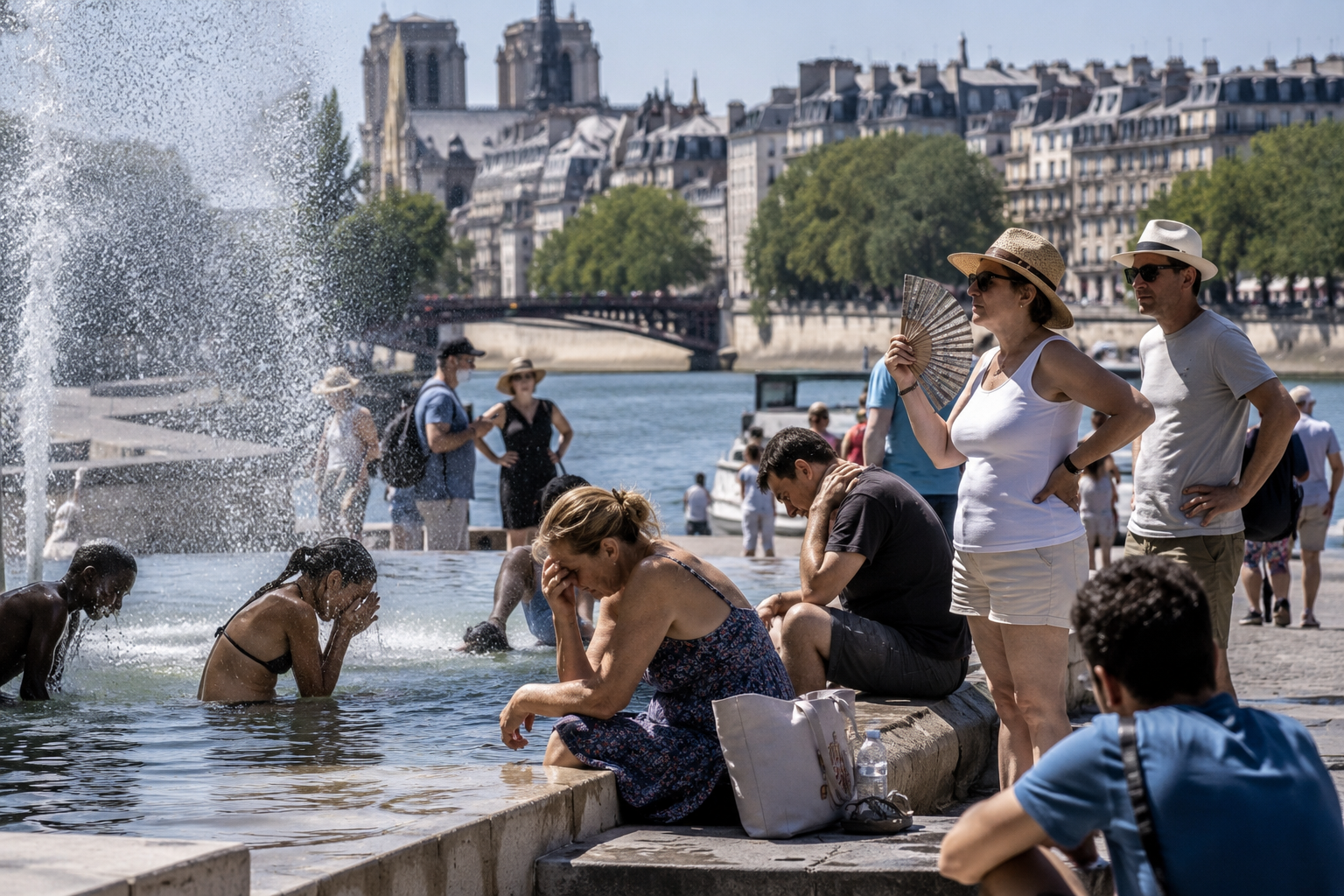
The latest Europe heatwave has turned into a deadly emergency, and France is at the center of one of its most tragic chapters so far. What began as another brutal spell of summer heat has now taken a heartbreaking turn, with about 20 people reported drowned in France after trying to cool off in unsafe swimming spots during the extreme temperatures.
That is what makes this Europe heatwave story so disturbing. It is not only about scorching temperatures or uncomfortable summer days. It is about how dangerous heat can push people into risky choices, overwhelm public safety systems, and turn a search for relief into a life-or-death situation.
Across Europe, governments are issuing warnings, schools are facing disruption, and public health concerns are growing. But in France, the crisis has already shown its human cost in the most painful way possible.
Why This Europe Heatwave Is More Than a Weather Story
The current Europe heatwave is not just another seasonal weather event. It has become a continent-wide safety issue affecting daily life, public health, transport, and emergency response.
In France, the danger became especially clear after reports that about 20 people had drowned since the weekend while swimming in unsupervised or unauthorised areas. These were not random accidents disconnected from the weather. They were directly tied to the extreme heat, as people looked for immediate ways to escape the high temperatures.
That is what makes this Europe heatwave different from a simple summer headline. The crisis is now reaching far beyond the thermometer. It is changing behaviour, putting pressure on public spaces, and exposing the gaps in how cities and communities deal with extreme heat.
France Has Become the Most Alarming Part of the Story
France has seen some of the most worrying consequences of the current Europe heatwave, not just because of the temperature, but because of what people have been driven to do in order to cope with it.
Officials said about 20 people drowned since the weekend while trying to cool off in areas that were not supervised for swimming. The detail is important because it shows how severe heat can create secondary risks that are just as deadly as the heat itself.
People were not simply gathering at beaches or pools. Many were turning to rivers, lakes, and other unofficial places where there were no lifeguards, no clear safety measures, and no proper monitoring. In those moments, a desperate attempt to escape the Europe heatwave became a tragedy.
French Sports Minister Marina Ferrari warned people about swimming in unauthorised areas, underlining just how dangerous those choices can become during extreme weather.
Temperatures Around 40C Pushed People to the Edge
The pressure behind these tragedies becomes easier to understand when you look at the temperatures France was facing. Much of the country was expected to see heat close to 40 degrees Celsius, a level that can quickly become dangerous, especially when it lasts for several days.
For many people, that kind of heat is not just exhausting. It changes how the body functions, how people move through the day, and how urgently they look for relief. Homes become stifling, public transport becomes draining, and even simple outdoor activities become difficult.
That is why the Europe heatwave has become such a powerful public safety story. It is not only making people uncomfortable. It is pushing them into situations where normal judgment can give way to urgency.
When temperatures rise that sharply, the desire to jump into water, any water, becomes understandable. But as France’s drowning deaths show, not every place that looks like relief is actually safe.
The Europe Heatwave Is Sweeping Across the Continent
France may be the most heartbreaking example right now, but the Europe heatwave is much bigger than one country. The same wave of extreme temperatures has spread across several parts of the continent, creating a regional emergency rather than a local one.
According to the report, countries including Britain, Italy, and Spain were also dealing with severe heat. That wider spread matters because it shows that this is not a short-lived local spike. It is a broad weather event affecting millions of people across multiple countries at the same time.
Whenever a Europe heatwave stretches across borders like this, the pressure multiplies. Health systems come under strain. Transport services are tested. Schools and workplaces have to adjust. Public officials are forced to respond not only to the heat itself, but also to everything the heat disrupts.
That is why the story in France has drawn so much attention. It reflects a much wider European problem that is becoming harder to ignore every summer.
Why People Turn to Unsafe Water During Extreme Heat
One of the clearest lessons from this Europe heatwave is that extreme temperatures do not only threaten people directly. They also influence how people behave.
When the heat becomes relentless, water feels like the fastest solution. Rivers, canals, lakes, and open water spots suddenly look like lifelines. But when those places are unsupervised or unsafe, they can quickly become deadly.
In France, officials connected the drownings to bathing in unauthorised areas. That link matters because it shows how a climate and weather crisis can easily turn into a water safety crisis.
There are several reasons this happens during a severe Europe heatwave:
- People want instant relief and act without fully assessing the danger
- Safe public swimming areas may be overcrowded, closed, or too far away
- Strong heat can cause exhaustion, poor judgment, and physical weakness
- Younger swimmers may underestimate currents, depth, or hidden hazards
In other words, the heat does not just create discomfort. It creates urgency, and urgency can lead people into dangerous places.
The Public Health Risk Is Growing Fast
The Europe heatwave is also a serious health emergency. High temperatures place stress on the body, especially when they continue for several days without relief at night.
Children, older adults, outdoor workers, and people with existing health conditions are often the most vulnerable. But even healthy people can struggle in intense heat, particularly when hydration drops, sleep becomes difficult, and there is no proper cooling indoors.
The dangers linked to a major Europe heatwave can include:
- Heat exhaustion
- Dehydration
- Heatstroke
- Fainting and dizziness
- Worsening heart or breathing problems
The drowning deaths in France show that the impact of a heatwave does not always come in the form people expect. Sometimes the heat itself is not the final cause of death. Instead, it triggers the choices and conditions that lead to disaster.
The Europe Heatwave Is Disrupting Daily Life Across Europe
Another reason this story feels so serious is because the Europe heatwave is affecting much more than beaches or swimming areas. It is interfering with the basic rhythm of daily life across the continent.
Extreme heat can change how cities operate. It can affect schools, public transport, outdoor work, tourism, and even electricity demand. In many parts of Europe, homes and public buildings are still not fully designed for repeated, intense summer heat. That makes every new heatwave harder to manage.
Across Europe, the impact of this Europe heatwave is being felt through:
- Pressure on emergency and health services
- Difficult travel conditions in cities and transport networks
- Safety concerns for children and older people
- Increased demand for cooling spaces and public water access
- Greater stress on local authorities trying to keep people safe
This is why heatwaves are no longer being treated as simple weather stories. They are becoming infrastructure stories, health stories, and public safety stories all at once.
France’s Drownings Show the Hidden Cost of Heat
The most powerful part of this Europe heatwave story is that it reveals a hidden side of extreme weather. Most people think of heat deaths as cases of dehydration or heatstroke. But the French drownings show that the consequences can be much broader.
People trying to escape dangerous heat entered unsafe water and never made it back. That makes the tragedy both immediate and symbolic. It shows how climate stress can create risks in places that are not always part of the public conversation.
In a way, these drownings capture the real danger of the Europe heatwave more clearly than any temperature map could. They show how extreme weather can affect ordinary decisions, public spaces, and daily routines in ways that are deeply human and deeply painful.
What Europe Needs to Learn From This Heatwave
If there is one clear lesson from the current Europe heatwave, it is that emergency planning cannot stop at heat warnings. Telling people to drink water and stay cool is important, but it is no longer enough on its own.
Governments and local authorities need to think more broadly about what people actually do during extreme heat, especially when they do not have easy access to safe cooling spaces.
Some of the most urgent priorities include:
More safe public cooling spaces
People need places to cool down that do not involve taking risks in unsafe rivers, canals, or lakes.
Stronger water safety warnings
If officials know people will turn to water during a Europe heatwave, then swimming safety messages need to be part of heatwave communication.
Better support for vulnerable communities
Older adults, children, low-income households, and people without access to cooling are often at the greatest risk.
Faster emergency messaging
When heat becomes severe, people need practical advice quickly and clearly, not just general warnings.
Long-term planning for hotter summers
Europe’s cities, schools, transport systems, and public spaces will need to adapt if extreme heat keeps arriving earlier and lasting longer.
Final Thoughts
The current Europe heatwave has already shown how dangerous extreme summer weather can become, and France’s drowning deaths have given that warning a tragic human face. About 20 people reportedly lost their lives while trying to escape unbearable temperatures, turning a search for relief into one of the most heartbreaking stories of the summer so far.
What makes this moment so important is that it reveals the true scale of the challenge. This is not just about hot afternoons or broken weather records. It is about how Europe prepares for rising heat, how cities protect people under pressure, and how quickly a public health threat can become a public safety disaster.
The Europe heatwave is a reminder that extreme heat is no longer a background issue. It is a real and growing risk that affects how people live, move, work, and survive. If Europe wants to avoid more tragedies like the ones seen in France, it will need to treat heatwaves with the same seriousness as any other major emergency.
Read Other Interesting news here: US Iran Talks
